

How Phonout works
The whole approach in four stages.
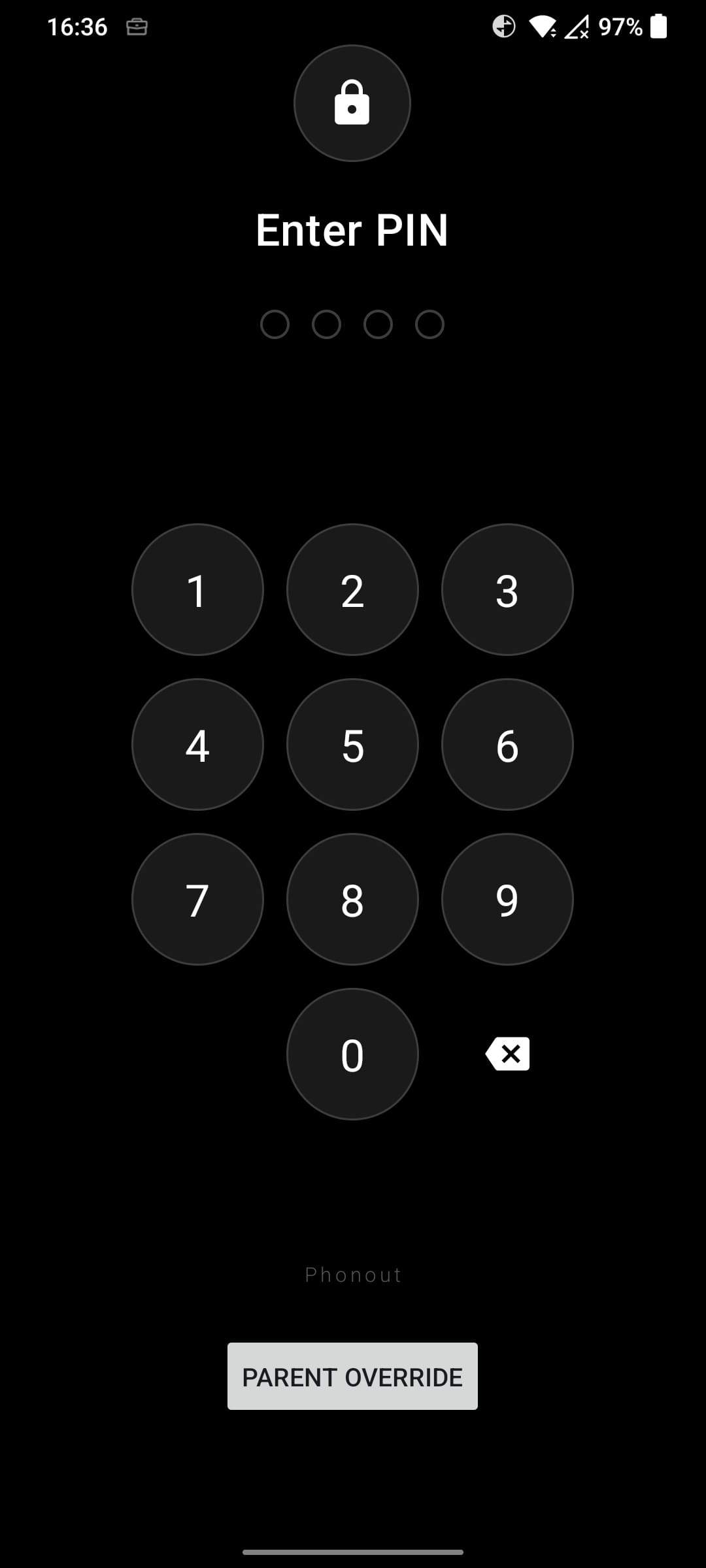
Create a parent PIN
Choose a four-digit PIN that only you know. It is stored on your device and is the only way to unlock a locked screen early.
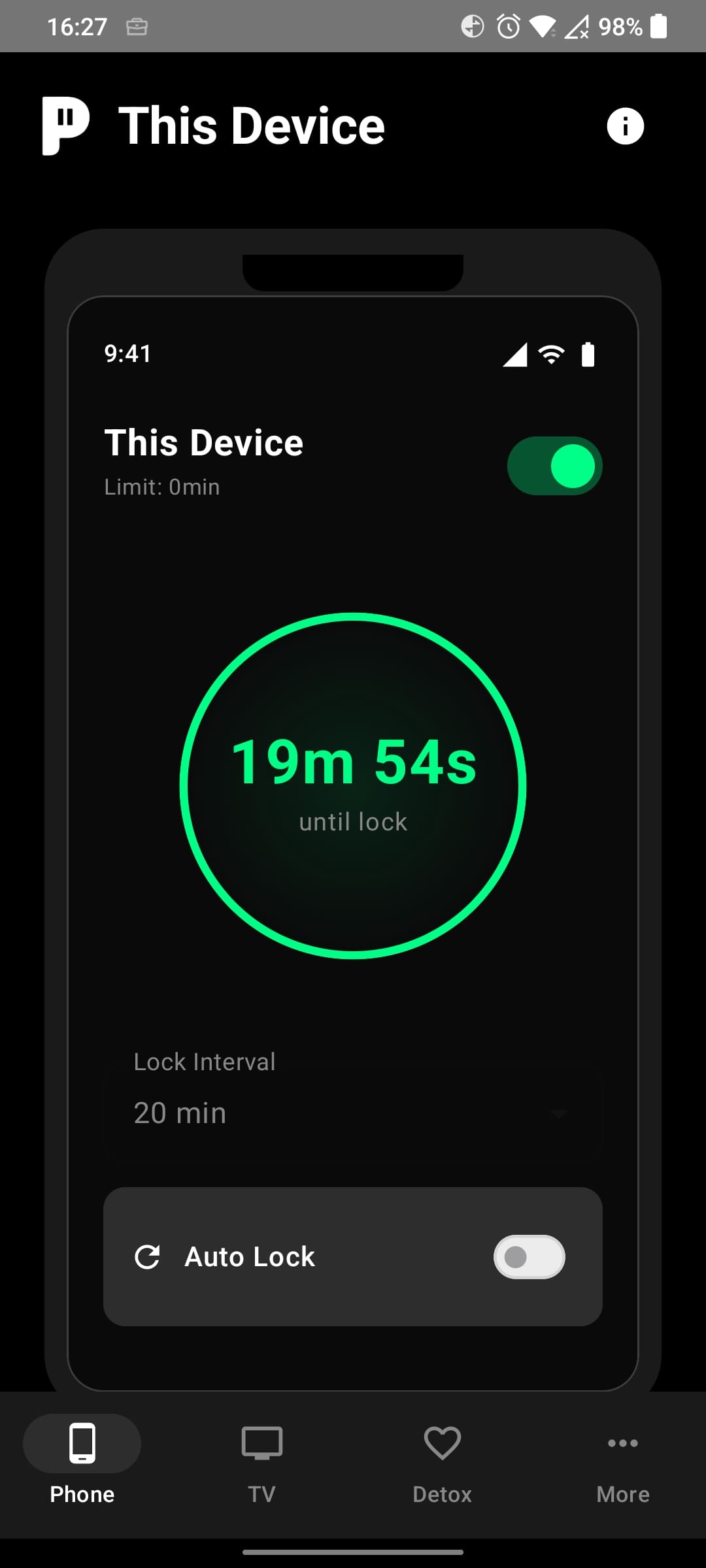
Choose daily phone time
Pick a limit that suits your family and an auto-lock interval. Phonout counts down and locks the phone when time is up.
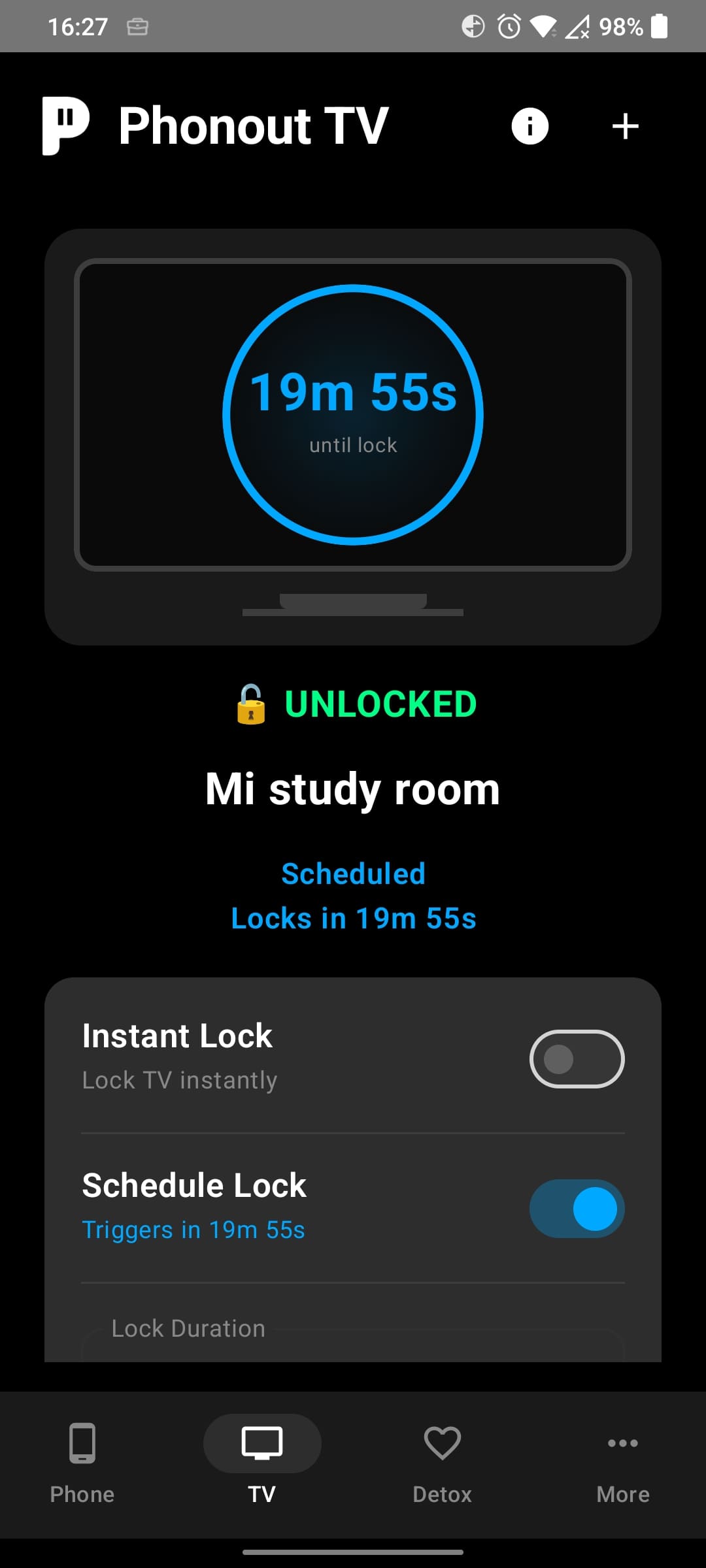
Control the TV
Pair a TV and choose a scheduled lock or an instant lock from your phone. The same PIN protects it.
A lock that holds
When time is up, a full-screen overlay appears. There is nothing to argue with, and only the parent PIN opens it.

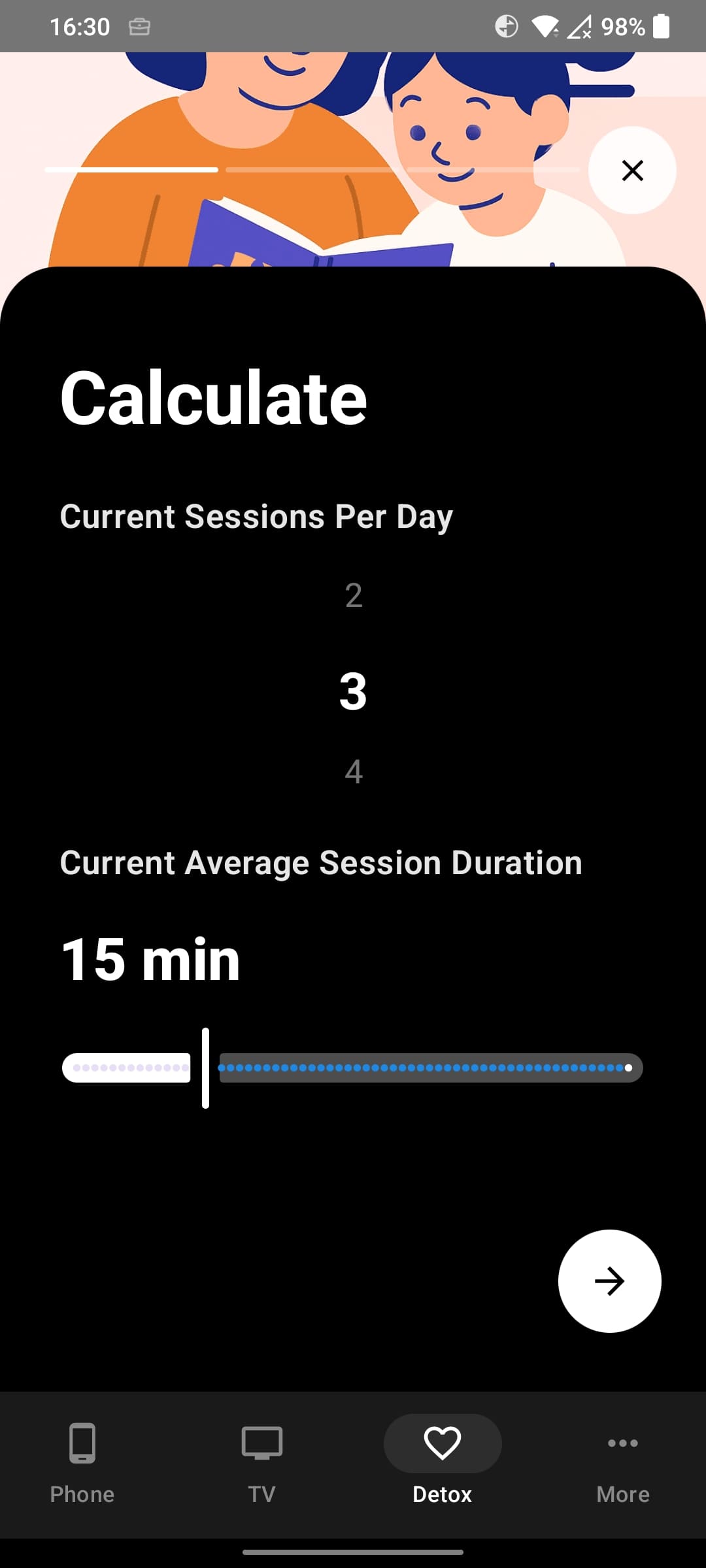
Plan a gradual detox
The detox calculator turns a goal into sessions per day and minutes per session, so reduction happens in steps your child can manage.
Watch the trend
Daily, monthly and yearly statistics show whether screen time is actually falling, so you can adjust the plan with facts.
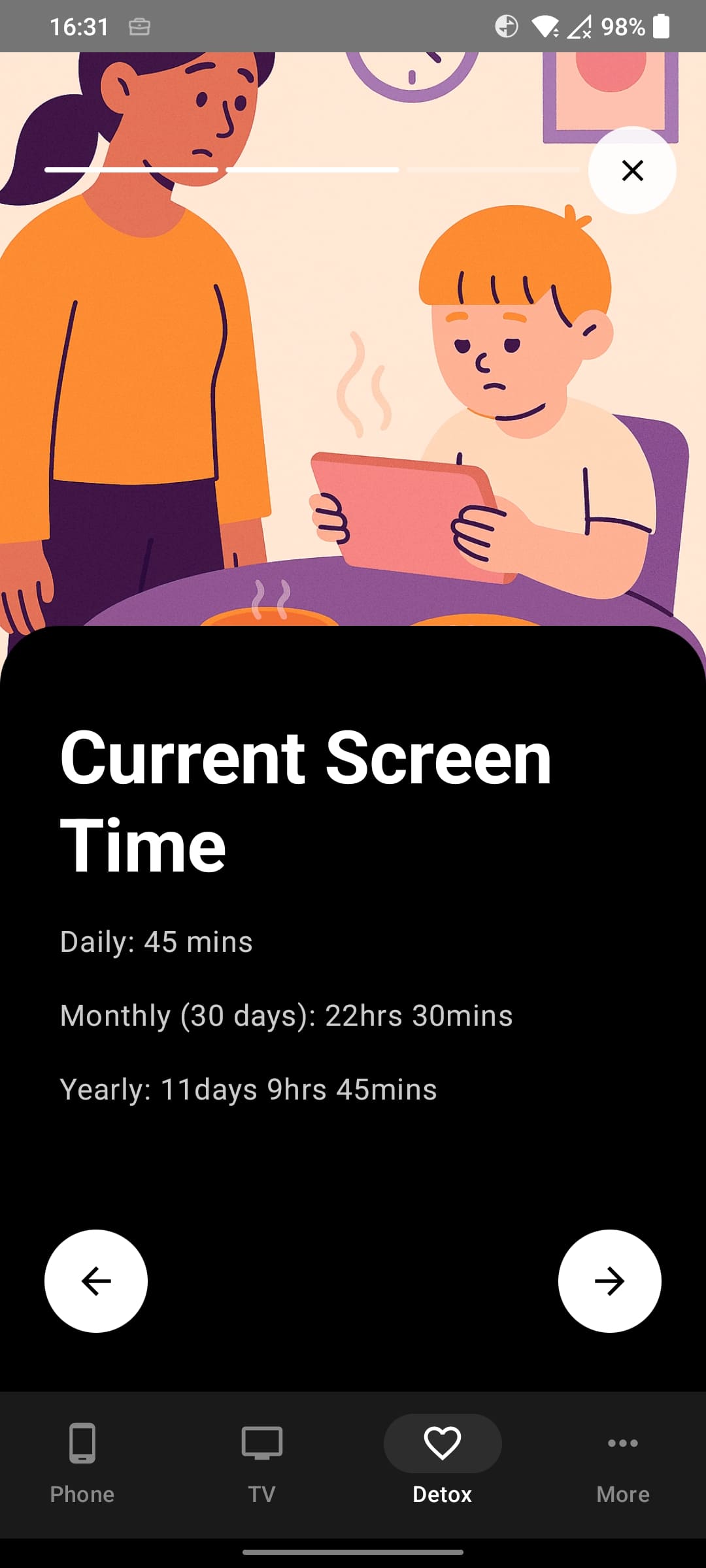
Start the 14-day program
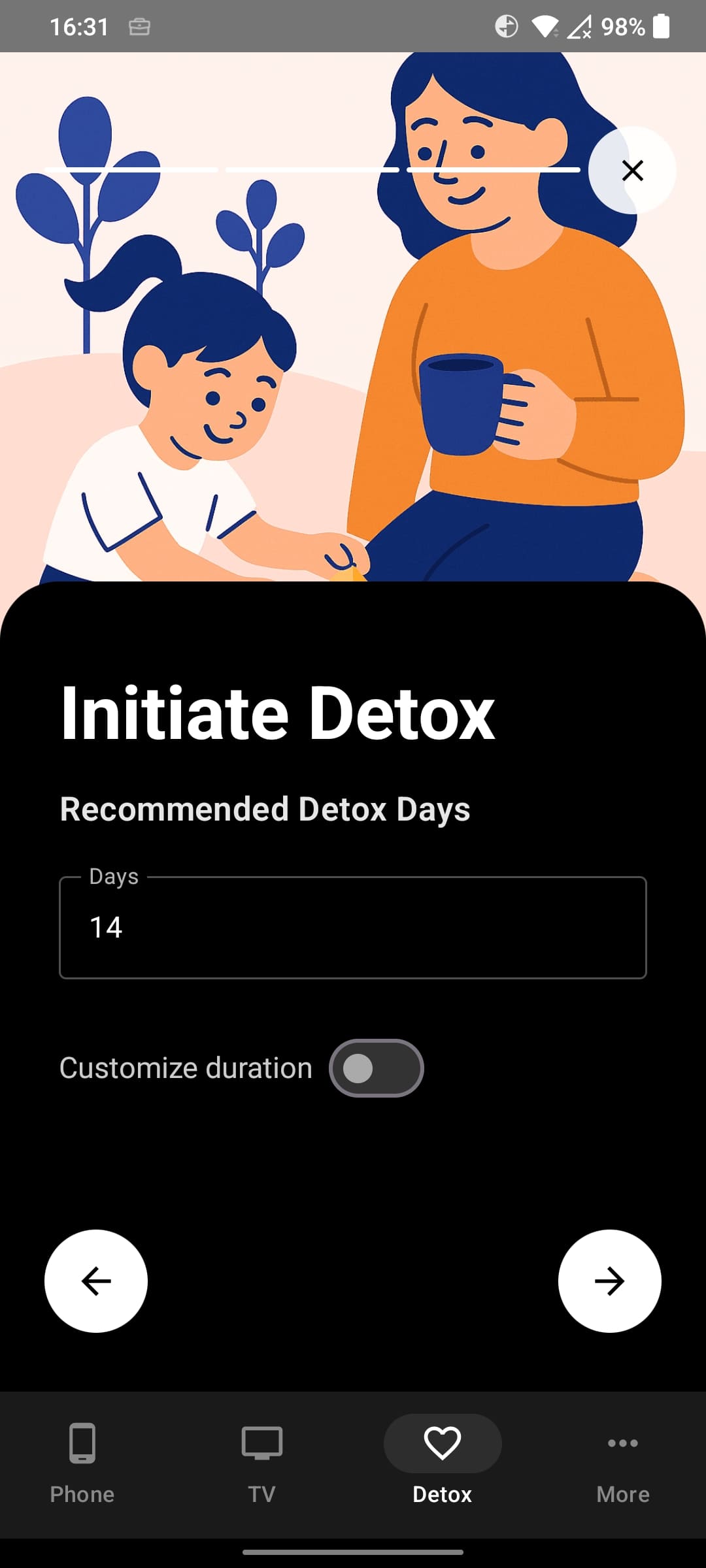
The recommended first program runs for 14 days and sets up the routine. From there you continue toward the full 66-day journey.
Reduce, agree, repeat.
Reduce, do not restrict
Lower daily time in small steps so each step feels achievable. Sudden cuts create resistance.
Automate the lock
The app enforces the limit, not you. That removes the daily negotiation and keeps the relationship calm.
Plan for 66 days
New routines need weeks to settle. Phonout structures the first 14 days and carries the plan through 66 days.
Measure what changes
Statistics show progress, so adjustments are based on what is actually happening.